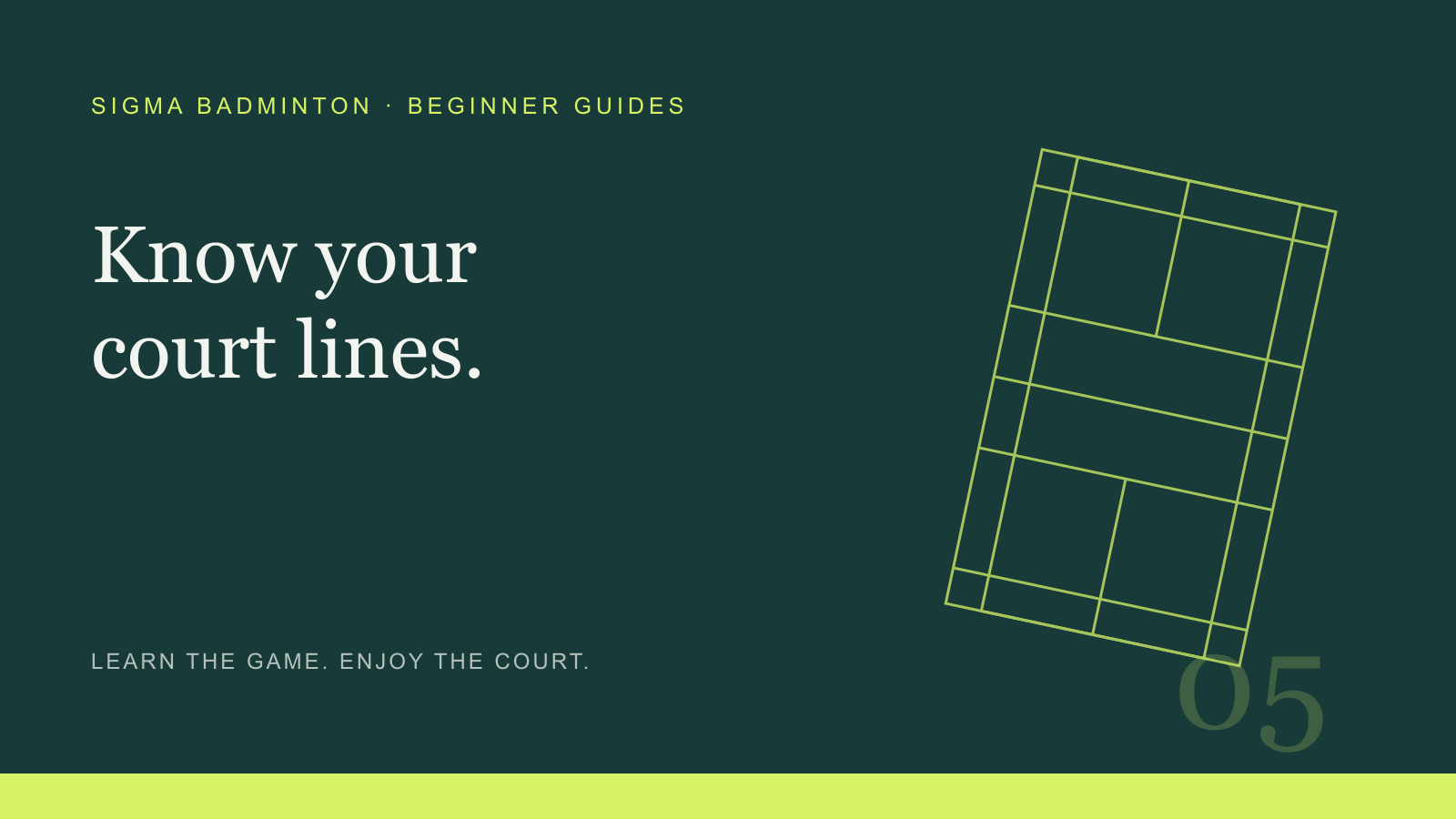
A standard badminton court is 13.4 meters long. Doubles uses its full 6.1-meter width; singles uses the narrower 5.18-meter width. Both use the full length during rallies. Service boxes change by format, and the relevant lines count as in. Learn the boundary names before trying to memorize every measurement.
Singles has one player on each side and a narrower court. Doubles has two per side, a wider rally court, and a shorter service box. The scoring framework is shared, but doubles adds service-order and partnership decisions. Choose either format for a first session, then learn its boundaries and responsibilities.
A fault loses the rally; a let cancels that rally and repeats service without changing the score. Net contact, body contact, service mistakes, and interruptions have different conditions. Identify what happened, whether the shuttle was still in play, and the applicable rule before deciding that every unusual moment deserves a replay.
A clear sends the shuttle deep from an overhead contact; a lift sends it deep from below. A drop travels from the rear court toward the net; a net shot starts near the net. Smashes attack downward, while drives travel flat. Learn controlled contact and recovery before adding power.