Understand badminton scoring, legal serves, court boundaries, singles and doubles, faults, and lets through worked examples and practical explanations.
Badminton uses rally scoring: the side that wins a rally gains a point and the next serve. Return the shuttle over the net before it touches the floor. Learn the relevant court boundaries, serve diagonally, and keep track of the server’s score. Singles and doubles share these foundations but use different widths and service arrangements.
Badminton awards one point to the side winning each rally, whether serving or receiving. The winning side has the next serve. Use the server’s score to choose right for even numbers and left for odd numbers. In doubles, track the established service positions as well as the score; there is no second server.
Serve diagonally from the court matching your side’s score: right for even, left for odd. Both server and receiver must stand off the lines and keep part of both feet stationary on the floor. Release without added spin, strike the base first, and keep the entire shuttle below 1.15 meters at contact.
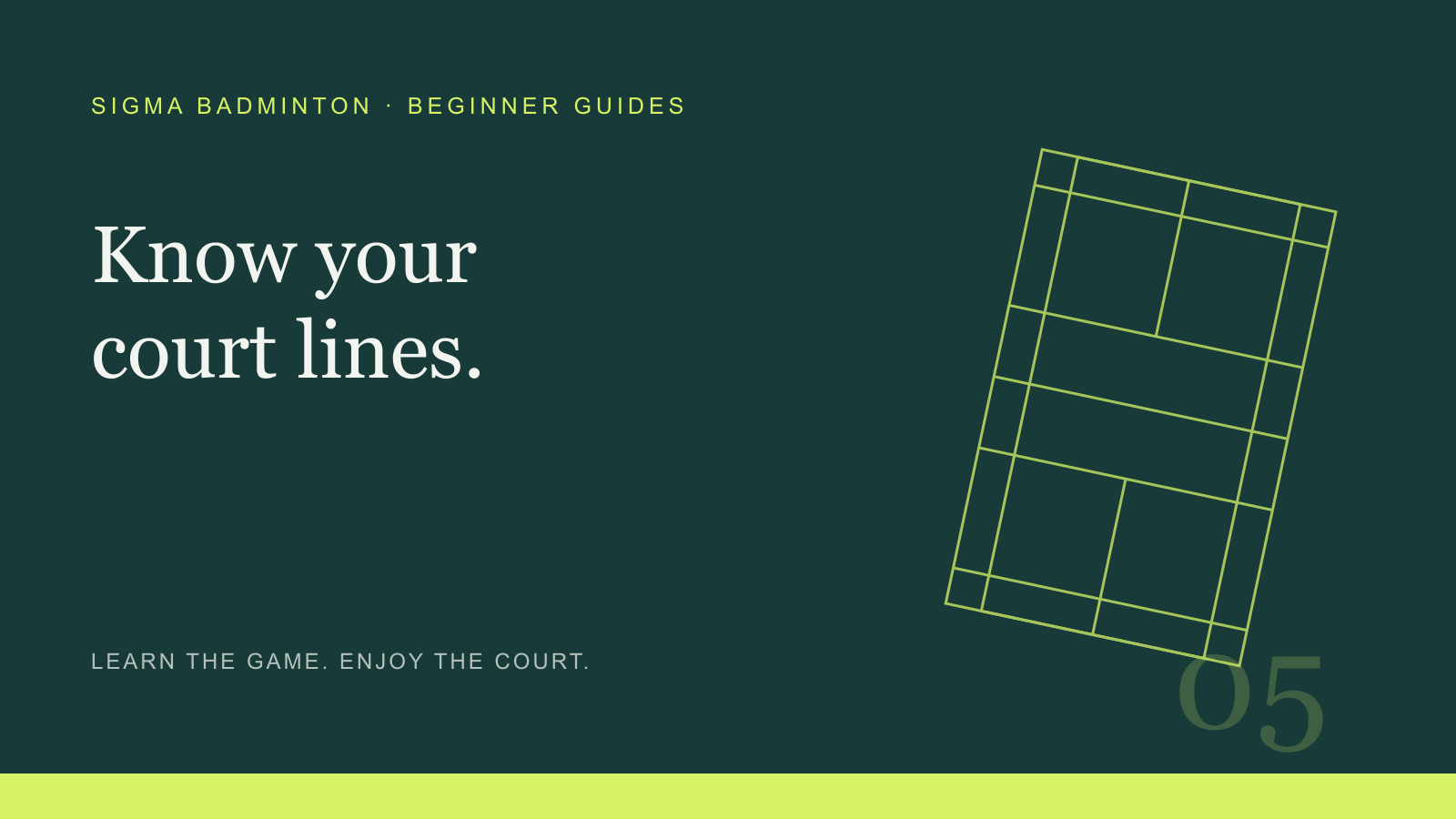
A standard badminton court is 13.4 meters long. Doubles uses its full 6.1-meter width; singles uses the narrower 5.18-meter width. Both use the full length during rallies. Service boxes change by format, and the relevant lines count as in. Learn the boundary names before trying to memorize every measurement.